Understanding 1031 Exchanges: How to Defer Capital Gains When Selling Investment Property
A 1031 exchange, also known as a like-kind exchange, is one of the most valuable tax strategies available to real estate investors and farmland owners. It allows you to sell an investment property and reinvest the proceeds into another qualifying property while deferring capital gains taxes.
While the concept is relatively straightforward, the rules and timelines can become complex. If you're considering a 1031 exchange, understanding the basics can help you determine whether it's the right strategy for your investment goals.
What Is a 1031 Exchange?
A 1031 exchange allows you to sell one investment property—known as the relinquished property—and purchase another investment property, called the replacement property, while postponing the payment of capital gains taxes. In the ideal scenario, the replacement property is of equal or greater value than the property being sold, allowing you to defer the entire capital gain.
It's important to remember that this is a tax deferral, not a tax exemption. Many professionals describe it as "kicking the can down the road." The capital gains tax isn't eliminated—it is simply postponed until you eventually sell the property without completing another 1031 exchange.
Deferral vs. Elimination: What's the Difference?
One of the biggest misconceptions about 1031 exchanges is that they eliminate capital gains taxes.
In reality:
Taxes are deferred, not forgiven.
As long as you continue exchanging into qualifying investment properties, you continue postponing the tax.
If you eventually sell without completing another exchange, the deferred capital gains become taxable.
In many cases, if the property is held until death, heirs may receive a step-up in basis, potentially reducing or eliminating the deferred capital gains tax under current tax law.
Does Your Property Qualify?
A 1031 exchange generally applies to investment or business real estate exchanged for other investment or business real estate. Personal residences do not qualify.
For farm owners, however, the answer is often more nuanced.
Many farms include both:
A personal residence
Agricultural land and business assets
In these situations, an appraisal can often separate the value of the residence from the income-producing farmland and buildings. The residential portion may qualify for the homeowner capital gains exclusion, while the remaining agricultural property may qualify for a 1031 exchange.
Why Your CPA Is Essential
A successful 1031 exchange is typically a team effort involving:
Your attorney
A qualified intermediary
Your CPA or tax advisor
Your real estate professional
While attorneys and qualified intermediaries help facilitate the transaction, your CPA determines whether a 1031 exchange actually makes financial sense based on factors such as:
Original purchase price (basis)
Depreciation taken
Existing mortgages
Potential capital gains
Overall tax implications
Because every situation is unique, tax professionals strongly recommend consulting your CPA before moving forward with an exchange.
Understanding "Boot"
One of the primary goals of a 1031 exchange is avoiding something known as boot.
Boot refers to any cash or value you receive that is not reinvested into the replacement property. That amount generally becomes taxable.
For example:
Sell investment property for $500,000
Purchase replacement property for $400,000
The remaining $100,000 is considered boot and may be subject to capital gains tax.
To fully defer taxes, investors generally aim to purchase replacement property of equal or greater value and reinvest all proceeds from the sale.
Ownership Must Remain Consistent
The ownership of the replacement property generally must match the ownership of the relinquished property.
For example:
If an individual owns the original property, that same individual typically purchases the replacement property.
If an LLC owns the original property, the LLC generally must acquire the replacement property.
Partnerships and LLC ownership can introduce additional planning opportunities and complications, making professional tax and legal advice especially important.
The Role of a Qualified Intermediary
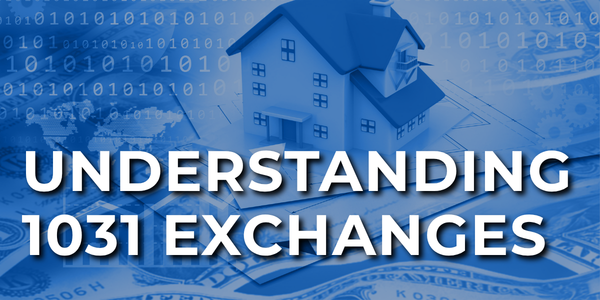
One of the most important requirements of a deferred 1031 exchange is the use of a Qualified Intermediary (QI).
A Qualified Intermediary:
Holds the proceeds from the sale of your property.
Prevents you from taking possession of the funds.
Prepares required exchange documentation.
Transfers the proceeds toward the purchase of your replacement property.
If you receive the sale proceeds directly—even briefly—you generally lose your ability to complete a valid 1031 exchange.
Types of 1031 Exchanges
Although several types of exchanges exist, most investors utilize the traditional deferred exchange.
1. Simultaneous Exchange
Both the sale of the relinquished property and purchase of the replacement property occur on the same day. This type is uncommon due to the difficulty of coordinating both transactions.
2. Deferred Exchange
The most common type of 1031 exchange. The original property is sold first, followed by the purchase of a replacement property within IRS deadlines.
3. Reverse Exchange
The replacement property is purchased before the original property is sold. These transactions are significantly more complex and expensive.
4. Construction or Improvement Exchange
Exchange proceeds are used not only to purchase replacement property but also to fund improvements or new construction before the exchange is completed.
Timing Is Everything
The success of a 1031 exchange often comes down to meeting two critical IRS deadlines.
45-Day Identification Period
Within 45 days after selling your property, you must identify potential replacement properties in writing to your Qualified Intermediary.
180-Day Exchange Period
You then have 180 days from the sale of the original property to complete the purchase of the replacement property.
Because suitable properties can be difficult to find, many professionals recommend beginning your property search before selling your current investment property.
How Many Replacement Properties Can You Identify?
IRS rules allow some flexibility when identifying replacement properties.
Common identification rules include:
Three Property Rule: Identify up to three replacement properties, regardless of value.
200% Rule: Identify more than three properties as long as their combined value does not exceed 200% of the relinquished property's value.
95% Rule: Identify properties exceeding the 200% limit, provided at least 95% of the identified value is ultimately acquired.
While these options exist, most exchanges involve one replacement property—and occasionally two or three—keeping the transaction much simpler.
Is a 1031 Exchange Right for You?
A 1031 exchange can be an excellent tool for investors and farmland owners looking to preserve investment capital, grow their portfolio, or transition into different types of real estate without immediately paying capital gains taxes.
However, every situation is unique. Property ownership structure, depreciation, basis, financing, and future investment goals all influence whether a 1031 exchange makes sense.
Before selling investment property, consult with your CPA, attorney, qualified intermediary, and real estate professional to determine the best strategy for your specific circumstances. With proper planning, a 1031 exchange can become a powerful long-term wealth-building tool.
Connect with a Beiler-Campbell Professional
This article is for general informational purposes only and is not tax, legal, or financial advice. Beiler-Campbell Realtors recommends consulting a qualified tax or legal professional regarding your specific 1031 exchange.